 Archos Labs
What Leaders Reward Is What AI Culture Becomes
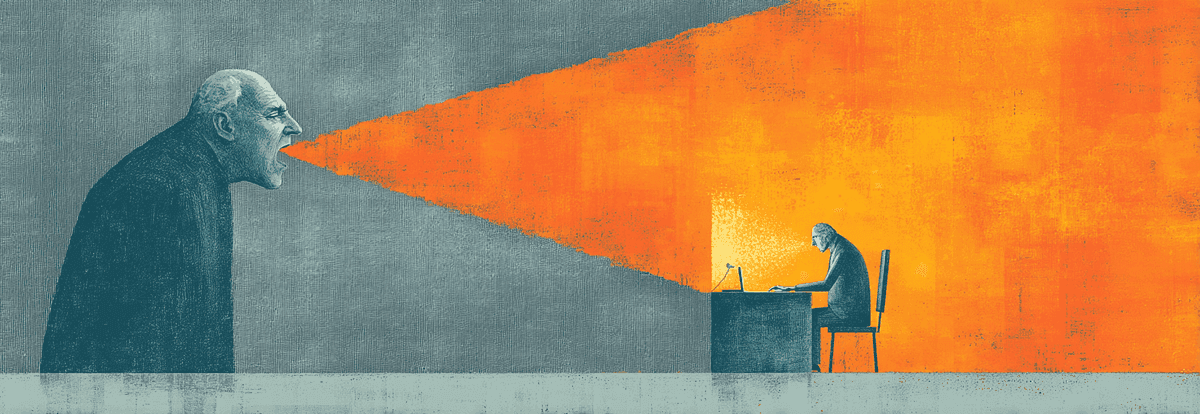
AI culture isn't built by training programmes. It's built by what leaders visibly reward and question every day — here's the model.
A leader at an all-hands meeting praises an employee for cutting a reporting process from four hours to forty minutes using an AI tool. The room notices. Not because the time saving is impressive — but because the leader named it and treated it as the right kind of work. One moment like this does more for AI adoption than any mandatory e-learning module the organisation deploys this quarter.
The training programme is not the problem
Most organisations respond to AI adoption pressure by building programmes — curricula, certification tracks, lunch-and-learns. These are not useless. But Tsedal Neeley at Harvard Business School argues the real lever is what leaders reward, not what they schedule. When leaders publicly recognise employees who experiment responsibly with AI, they signal experimentation is safe. Staying silent about AI use, or worse, questioning whether the output is the employee's work, signals the opposite.
The PMC's 2025 peer-reviewed study on AI anxiety found employee attitudes and fear are the proximate barrier to adoption — not skill gaps, not tool access. Employees who are anxious about AI do not reach the stage where daily use builds competence. They opt out before the tool ever gets a chance to prove itself. Training programmes assume employees are willing to show up. Leader behaviour determines whether they are.
The counterargument is partially right
O'Brien's opposing position — daily AI use rather than leadership reward signals is the actual engine of culture change — is worth taking seriously. When an employee watches a colleague solve a real problem faster with an AI tool, that observation shifts behaviour more reliably than a public acknowledgement from a senior leader. Peer-to-peer adoption is real. It spreads without top-down intervention once it starts.
The problem is the word "once." The mechanism only works after employees feel safe enough to experiment in the first place. Korn Ferry's AI-readiness research identifies psychological safety as a distinct precondition — something leaders create through visible behaviour, not something that emerges automatically from tool access. O'Brien's model explains how culture spreads. It does not explain how the conditions for spreading get established.
What observable leadership behaviour looks like
Deloitte's 2026 human capital research shifts the frame in a useful direction. It argues decision-making with AI is now a leadership skill, not a governance task. Leaders who assign clear owners to AI-assisted decisions and monitor outputs after deployment are doing something different from leaders who issue AI policies and step back. One group treats AI judgment as something they are personally accountable for. The second treats it as someone else's problem entirely, full stop.
Korn Ferry's guidance is specific on the reward side: reward outcomes, not activity. An employee who used AI to produce a better result faster should be recognised for the result, with the method named explicitly. Celebrating "she used AI to get here" is different from celebrating "she worked hard." The first tells the organisation what good looks like. The second tells them nothing useful at all.
I have watched organisations spend significant money on AI governance frameworks — I find most of them to be elaborate ways of avoiding the harder question of whether leaders are willing to change their own behaviour. Eventually the framework gets approved. Leaders keep rewarding what they always rewarded.
The signal you send without knowing it
UNESCO's 2025 independent expert group report frames AI adoption as a cultural governance problem, not a technical one. "The institution deciding what AI use gets celebrated is the institution shaping what AI use looks like." How this plays out in meeting rooms depends entirely on the questions leaders ask when someone presents AI-assisted work.
If you ask "did you check this?" you signal caution. If you ask "how did you get here so fast?" you signal curiosity. Both are legitimate. The difference is which one you ask first and which you ask more often — that's what shapes the room over time.
Neeley's minimum fluency argument applies here: you do not need to be a technical expert to reward the right behaviour. You need enough understanding to recognise responsible AI use when you see it. Then name it publicly every time it happens, without waiting for a formal moment.
The cultural conditions for AI adoption are not built in a training room. Those thirty seconds after someone shows you what they made — that's where it happens.


Read next

Human-Centered Transformation
AI Leadership in the Workplace: Daily Habits That Set the Tone
Your team doesn't fear AI — they fear you treating it as someone else's problem. Daily visible habits, not strategy decks, are what actually shift culture.
4 min read

Human-Centered Transformation
Redesign Incentives to Accelerate AI
Old KPIs quietly kill AI adoption. Redesigning even one scorecard metric — with real accountability attached — separates leaders who integrate AI from those…
4 min read

Human-Centered Transformation
AI Training That Measures The Wrong Thing
Most AI training tracks completion, not capability. Here's how L&D leaders can measure workflow adoption and decision quality instead.
3 min read