 Archos Labs
Metadata Is Your Org Chart in Disguise

Metadata doesn’t just describe your data. It exposes your power structure, your blind spots, and your collective blind faith in how things are labeled.
You Don’t Just Tag Data. You Encode Power.
Open any data catalog and you’ll see names, tags, owners, classifications. At first glance, it all looks neutral—just descriptions of data. But metadata is never neutral. It’s an architectural sketch of how your organization sees itself.
Look closer and you’ll notice: the marketing tables are pristine. Finance owns their fields like a gated suburb. Meanwhile, operations data is riddled with NULLs, shared ownership, and fuzzy definitions.
This isn’t coincidence. It’s culture.
Metadata reflects who has clarity, who has budget, who gets the final say. It shows which teams defend their domain and which ones are still begging for a seat at the naming convention table. Every data steward decision is a governance mirror.
Tagging Is a Form of Storytelling
The moment you label a column "Customer_Value_Score," you’ve declared a worldview. What’s valued, how it’s calculated, and who gets to decide. Every label implies a function, a bias, a lens.
And just like a broken org chart, most metadata is a historical artifact. Built during a product launch. Never revisited. Duct-taped through reorgs. Eventually treated as gospel.
So when AI or analytics pull from those tags, they’re inheriting not just structure—but assumptions. The machine learns from your logic, not your truth.
Your Catalog Is a Sociological Artifact
If you want to understand a company, skip the All Hands. Read the metadata.
Who owns what. Who disputes ownership. Where definitions loop in circles. Which terms have a dozen synonyms and no authoritative source. These aren’t just technical debts. They’re symptoms of real organizational misalignment.
One company labeled every sales table with “legacy_” because they feared overwriting them. Another had five competing definitions of “churn,” each tied to a different leader’s KPIs. The metadata wasn’t broken. It was politically accurate.
And every new platform just copies the same mess in prettier wrappers.
How to Audit the Hidden Logic
Don’t just look for gaps. Look for contradictions.
-
Where does ownership stop making sense?
-
Which tags reflect aspiration, not reality?
-
What language does one team use that another refuses to adopt?
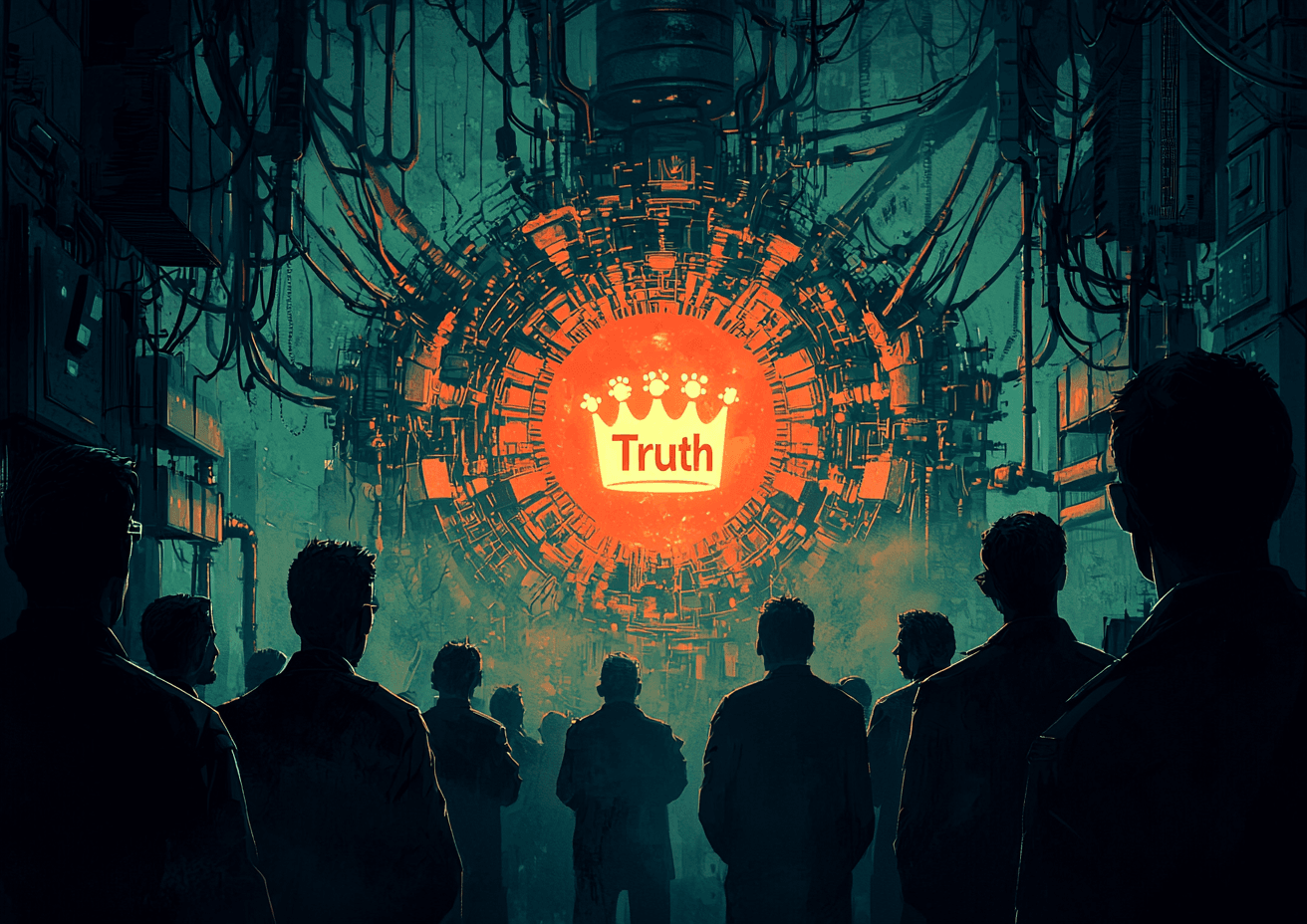
Run this like a truth audit. Not for compliance. For clarity. The goal isn’t cleaner metadata. It’s truer metadata—labels that reveal how your business really functions, not how you wish it did.
Metadata doesn’t follow your org chart. It is your org chart. Just more honest.


Read next

Data as a Decision Infrastructure
Metadata Catalog for Humans and Machines
Most metadata catalogs become corporate attics — visited only when risk wants screenshots. Here's how to build one shelf that analysts trust and AI agents can…
4 min read
Data as a Decision Infrastructure
Data Work Is Political
Every metric has a power base. Cleaning up lineage and aligning definitions isn't governance work — it's a turf war. Here's why data teams keep losing it.
3 min read

Data as a Decision Infrastructure
The Dangerous Things Your Infrastructure Forgets
Every dropped log and overwritten table is a memory edit. Infrastructure doesn't just move data — it decides what your organization gets to remember when…
4 min read