 Archos Labs
TeraWulf's $19B Kentucky number is lease revenue
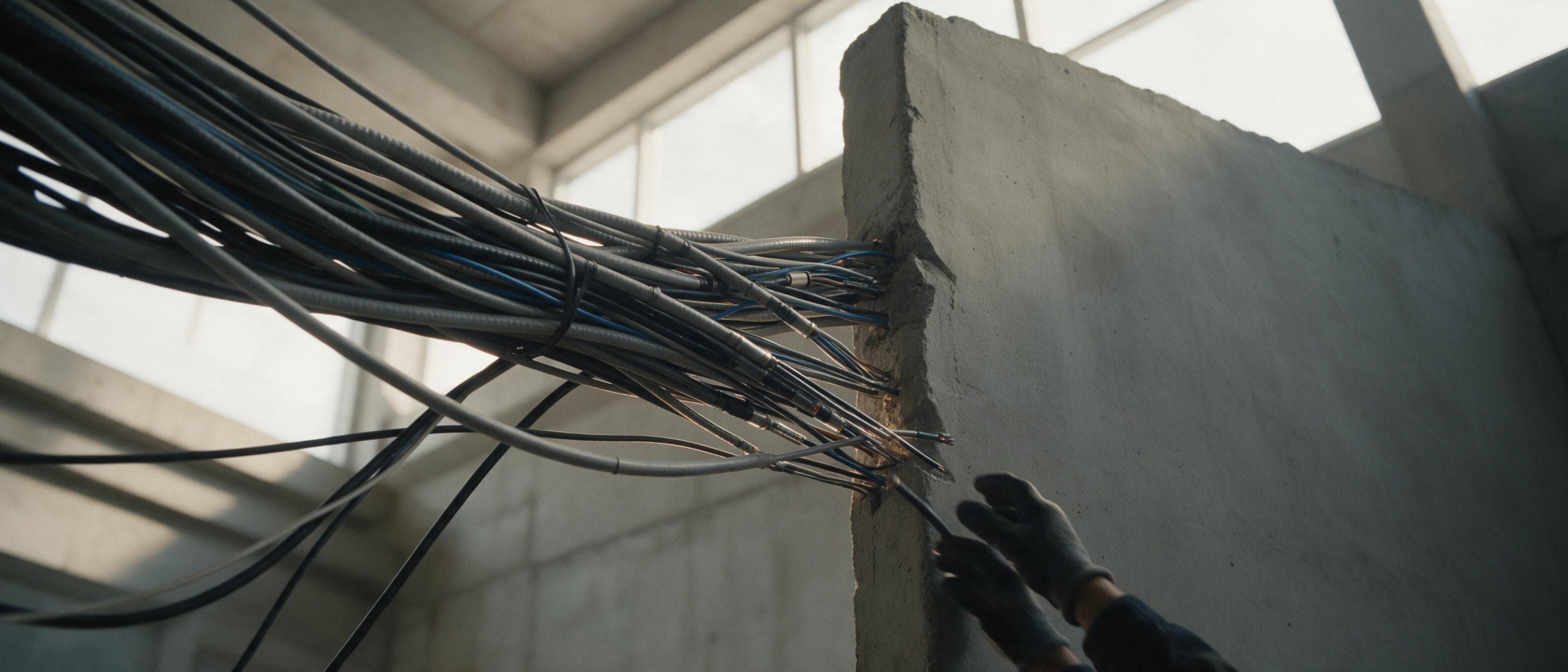
When TeraWulf announced Google's credit support for its Kentucky data center on November 4, 2026, the release put $19 billion next to the words "contracted lease commitments." The headline moved the number next to "data center." Moving a figure to a different noun changes what it measures, and it changes what you think Google signed.
Verdict: half true. Google did sign credit support agreements, but the release ties them to "approximately $19 billion of contracted lease commitments" and gives no figure for Google's share.
The $19 billion is Anthropic's side of a 20-year lease
The Q3 release, dated November 6, 2026, describes the Justified lease as a 20-year lease with Anthropic for approximately 401 MW of critical IT capacity. It calls the $19 billion "contracted revenue over the initial term." This is revenue promised over a lease term, and a construction budget is a different kind of number.
Neither release gives a build cost. TeraWulf executed a definitive EPC agreement with Fluor covering three data center buildings, with ready-for-service completions beginning in late 2027 and running through the second quarter of 2028. On price, the release says: "Guaranteed maximum pricing is being established in accordance with the agreement as engineering and procurement progress." The price is still being set.
One secondary outlet, which the research does not name and which I will call the secondary outlet from here on, puts TeraWulf's estimated development costs for the site and initial data halls at $4 billion to $4.5 billion. No primary document supplied carries this figure, so treat it as unverified. I infer even this outlet does not treat $19 billion as the build.
The debt had not been raised when the release went out
The release calls the financing "anticipated." Google "provides contractual credit support for anticipated debt financing supporting TeraWulf's long-term Justified development." No document gives the loan's size, its lenders or its pricing.
CFO Patrick Fleury described the purpose this way: "Strong investment-grade credit support strengthens the project's financing profile and our ability to pursue competitive long-term debt." The sentence talks about strengthening a profile and pursuing debt. It names no amount and describes no closed deal.
The release also lists Alphabet's senior unsecured debt ratings, AA+ from S&P Global Ratings and Aa2 from Moody's. I infer these ratings are what TeraWulf is borrowing, for a loan not yet raised. Neither release states the amount, form, fee, cap or trigger of Google's support. Without those, "back debt" stays a loose paraphrase, and nothing in the documents measures Google's exposure.
The secondary outlet reports WULF fell 4% on November 4 to $12.04 despite the news. The move records market reaction and carries no information about the deal's terms.
The other figures in the story carry conditions too
The Muskie power figure carries a condition in its own sentence. The Q3 release says TeraWulf "Increased contracted power capacity from 500 MW to 1,000 MW through amended electric service and transmission infrastructure agreements with Kentucky Power Company, subject to approval by the Kentucky Public Service Commission." An October 5, 2026 release adds Kentucky Power's construction schedule as a second condition for moving delivery of the second 500 MW phase from 2030 to 2029.
The coverage I reviewed states the increase without the approval condition. The headline's $19 billion lost its noun the same way, shedding "lease" on the way to "data center."
TeraWulf's own press release puts $19B next to Google's name
The best objection builds on TeraWulf's own wording. Its Q3 release titles the item "Google Credit Backstop for Anticipated Project Financing in Support of $19 Billion Anthropic Lease." The secondary outlet goes further, describing a guarantee of Anthropic's leases and three credit support agreements. If Google guarantees the lease, it stands behind the whole payment stream, and saying Google backs the $19 billion would be fair shorthand.
I won't rule this reading out, and the documents do not either. The Q3 release words the item as a backstop for project financing and also as support for Anthropic's lease, so what Google guarantees stays unsettled.
What the documents do settle is narrower. Even on the lease-guarantee reading, the thing backed is Anthropic's payment obligation, and no document says how much of it Google covers. The phrase "$19B Kentucky data center" still attaches a lease total to buildings whose guaranteed maximum price is still being established.
Timing is the secondary outlet's second claim. It says the guarantee "takes effect only once each lease's last data hall reaches its commencement date, with phased delivery expected from late 2027 through Q2 2028." In its words, this leaves "construction-period risk with TeraWulf and its lenders."
Neither primary release states this trigger. If it holds, Google's support would not cover the build, and the headline's verb sits further from the facts. Should it fail, the headline is closer than I have argued. The objection stands until someone publishes the agreements.
Four disclosures would settle most of it
I infer the lease revenue is what makes the debt financeable and Google's rating is there to lower its cost. No document says so, though it fits the CFO's phrase "competitive long-term debt."
The executed Google agreements would show the amount, guarantee type, triggers and fees, and whether construction-phase debt is covered. Once raised, the debt will show its size, lenders and pricing. Fluor's guaranteed maximum price will show what the buildings cost. The Kentucky Public Service Commission's ruling will show whether the 1,000 MW figure holds.
Sources
- TeraWulf Secures Google Credit Backstop for Project Financing in Support of $19 Billion Anthropic Lease; Executes Definitive Fluor EPC Agree. investors.terawulf.com.
- EX-99.1. sec.gov.
- EX-99.1. sec.gov.
- Press Releases :: TeraWulf Inc. (WULF). investors.terawulf.com.
- TeraWulf Falls 4% Despite Google Backstop for $19 Billion Anthropic Leases; Cipher Digital Plunges 18%, IREN Tumbles 9%. finance.yahoo.com.
- Google Agrees to Back Debt for TeraWulf's $19B Kentucky Data Center. HuggingNews, 5 November 2026. The headline this piece checks.


Read next
AI News
Only 7.8% of Anthropic's $895.4B compute bill is due soon
Anthropic's amended S-1 lists $895.4B in compute commitments, but only $69.8B is due within a year. Here is what the headline leaves out about the Q3 loss.
4 min read

AI News
Riot's $28B lease does not hand the tenant the site bill
Headlines say Riot's $28B AI data center lease shifts site construction costs to the tenant. Riot's own documents put the $5.5B of hard costs on Riot's side.
4 min read

AI News
Google's 9% share of AI API spending is an estimate
Google's share of enterprise AI API spending fell to 9%. Every figure matches Menlo's report, but the number is a U.S. survey estimate, not Google revenue.
4 min read